
Telemedicine Cart Buyer's Guide 2026: Integrated Diagnostics, Specs & Pricing
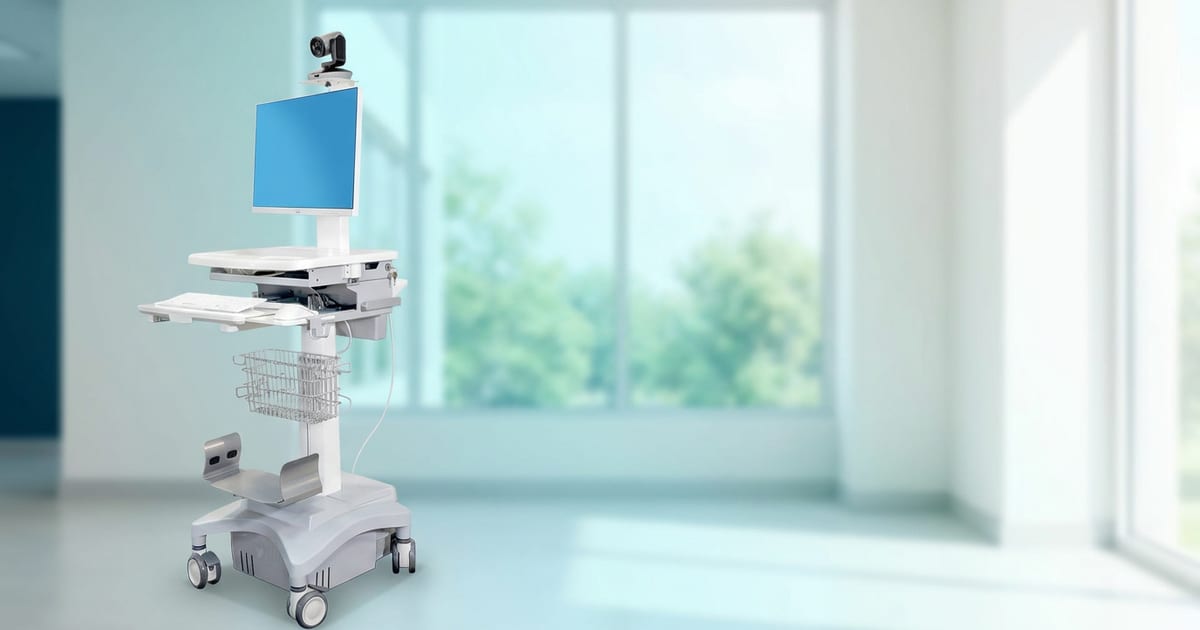
A telemedicine cart is a mobile, height-adjustable workstation that brings a computer or tablet, connected diagnostic instruments, and telemedicine software to the patient's bedside — so a remote physician can see, hear, and measure the patient in real time. If you need telemedicine in more than one room or across a facility, a telehealth cart is usually the right format. This guide covers what a telemedicine cart includes, how it compares to a kit or backpack, what to look for, and how pricing works.
What is a telemedicine cart?
A telemedicine (or telehealth) cart is a wheeled medical workstation built around three things: a screen and computer for the video consultation, connected diagnostic devices (ECG, digital stethoscope, vital-signs monitor, exam camera), and the software that streams every instrument's data live to the remote doctor. Unlike a fixed exam-room video setup, the cart moves between rooms, wards, or sites; and unlike a consumer video call, the clinician on the far end receives real diagnostic data — not just a webcam image.
Telemedicine cart vs kit vs backpack vs fixed room
The right format depends on mobility and setting:
- Telemedicine cart — best for facilities with multiple rooms (hospitals, nursing homes, clinics): a stable, powered workstation that rolls to the patient.
- Telehealth kit / case — best for a single consultation room or a clinician who carries it: the same instruments in a portable case. See our telehealth kit.
- Backpack — best for field and home visits where the operator travels light.
- Fixed exam-room AV — video only; no integrated diagnostics, no mobility.
What to look for in a telemedicine cart
- Height adjustment — powered (electric) or manual; lets staff work seated or standing and adapts to bed height.
- Battery — a built-in battery (e.g. 1000 Wh) runs a full shift without being tethered to a wall socket.
- Antimicrobial worktop & cleanable surfaces — essential in clinical settings for infection control.
- Integrated diagnostics — the cart should host the instruments you actually use, each communicating with the platform in real time, with no manual re-entry.
- Software integration — the cart is only as good as the platform behind it; data should stream live to the remote clinician.
- Mobility & stability — brake casters, guide handles, a stable base tested on inclines.
Configurations by use case
Hospitals and wards favour a powered, battery-backed cart that moves room to room. Nursing homes value a compact, antimicrobial cart staff can wheel to a resident's room. Rural networks and home-visit teams often pair a lighter cart — or a backpack — with the same connected instruments. Because the MedConnect platform is identical across formats, the clinical workflow doesn't change from one configuration to the next.
How much does a telemedicine cart cost?
Telemedicine carts are quoted by configuration rather than sold at a fixed shelf price: cost depends on the cart itself (fixed vs height-adjustable vs powered, battery, screen), the diagnostic instruments you add (ECG, stethoscope, vital-signs monitor, camera), the number of units, and the software subscription. Many deployments in primary-care networks and long-term-care facilities are eligible for funding that offsets part of the cost. Request a configured quote and our team responds within one business day.
Frequently asked questions
How much does a telemedicine cart cost? It's quoted by configuration — the cart (height, battery, screen), the diagnostic instruments added, the number of units, and the software subscription all factor in. Funding often offsets part of the cost for clinics and care networks.
What's the difference between a telemedicine cart and a telehealth kit? A cart is a wheeled workstation for facilities with multiple rooms; a kit puts the same connected instruments in a portable case for a single room or a clinician who travels. Both stream live diagnostic data to the remote doctor.
What diagnostic devices integrate with a telemedicine cart? Typically a digital stethoscope, 12-lead ECG, connected vital-signs monitor, and an exam or dermatoscope camera — each transmitting in real time to the platform with no manual entry.
Do I need special software for a telemedicine cart? Yes — the cart's value comes from the platform that streams its instruments live to the remote clinician. On the MedConnect platform every device feeds one screen during the consultation.
Powered or manual height adjustment? Powered (electric) height is faster for staff switching between seated and standing work or different bed heights; manual is more affordable and lighter. Both work; choose by usage intensity.
Ready to configure one? Explore the telemedicine cart range, compare it with a telehealth kit, or see the connected diagnostic devices that go on it.
Procurement context: compare the telemedicine cart with a mobile telehealth kit and the wider telehealth equipment range before choosing a form factor.
Equipping a rural or critical access hospital? See how carts, fixed stations and portable kits bring specialty consultations to the bedside on our telehealth for rural hospitals page.
Ready to discover MedConnect?
Request a personalized demo and see how the platform adapts to your practice.
Request a demo