How to Conduct a Remote Physical Exam: What Is Possible, System by System
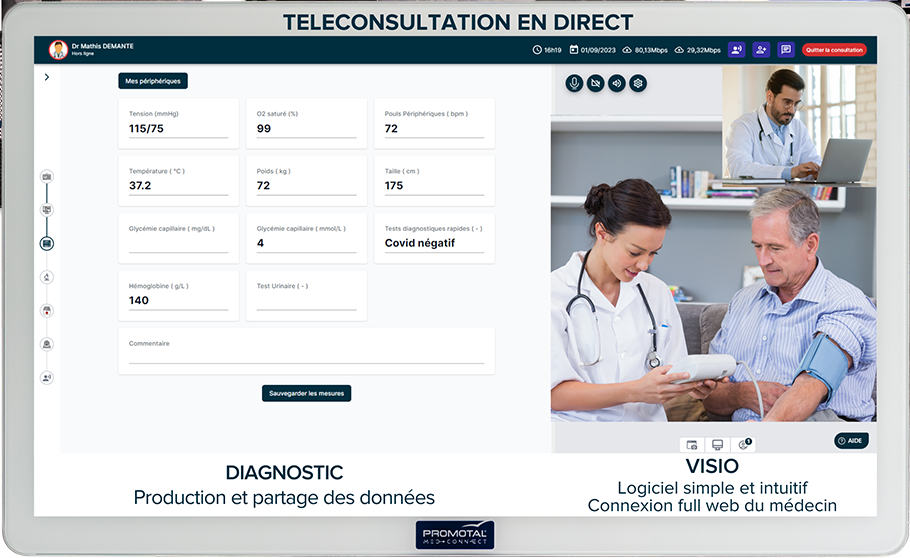
A remote physical exam is not a video call. It is an examination performed by a health professional present with the patient, using connected devices, while a remote physician watches the data live and directs the encounter. This page sets out, system by system, what that configuration can actually examine — and what it cannot.
Scope of practice, delegation rules and reimbursement vary by jurisdiction and profession. Confirm them locally before building a protocol around any of this.
What transmits well, and what does not
Three things transmit faithfully: a signal (ECG trace, spirometry), a sound (digital auscultation) and an image (skin, tympanic membrane, cervix). Two things do not transmit at all: palpation and smell. Every remote examination protocol is built on that boundary, and any vendor who implies otherwise is overselling.
System by system
- Cardiovascular — digital stethoscope auscultation and a 12-lead ECG carry most of what matters. Capillary refill and peripheral oedema still need the on-site professional's eye, described and photographed.
- Respiratory — digital auscultation plus pulse oximetry, with spirometry where the device is present. Respiratory rate and accessory muscle use are observable on video given decent framing.
- ENT — a digital otoscope gives a usable tympanic image. Throat examination depends heavily on lighting and patient cooperation, and is the weakest link in practice.
- Dermatological — the most favourable domain. A digital dermatoscope often produces a better image than the unaided eye, and it suits asynchronous specialist review particularly well.
- Abdominal — a hard limit. Auscultation transmits; palpation does not. The on-site professional can palpate and describe, but the remote physician is not examining the abdomen themselves, and the note should say so.
- Neurological — observation, speech, movement and some cranial nerve testing work on video. Reflexes and segmental strength require the on-site professional.
What the equipment has to do
Get the data into the patient record during the consultation, not after it. Without that, the physician is deciding on a verbal summary rather than on findings. A MedConnect telehealth kit writes the ECG trace to the record in about five seconds and streams auscultation live at low latency; the asynchronous mode covers sites where connectivity will not support live streaming.
Frequently asked questions
Does a remote physical exam replace an in-person one? No. It covers a large share of presenting complaints, not all of them. Palpation remains out of reach for the remote physician, and that limit should be documented rather than glossed over.
Who performs the manoeuvres? A health professional present with the patient. Which professions may do what varies by jurisdiction — confirm it for yours.
Is an ECG necessary? As soon as the presentation is cardiovascular, yes. Without a trace the remote physician cannot conclude, and the encounter becomes a referral.
Can the patient perform the exam on themselves? Consumer kits are built for that and it works for a narrow set of uses. For a billable clinical act on an unwell patient, a trained professional at the bedside changes what is achievable — see home versus clinical kits.
How should the remote exam be documented? Record which findings were captured by device, which were reported by the on-site professional, and which could not be assessed. That third category is the one most often omitted and the most important for defensibility.
Ready to discover MedConnect?
Request a personalized demo and see how the platform adapts to your practice.
Request a demo