Connected Audiometer & Tympanometer for Telemedicine: Tele-Audiology Equipment Guide 2026
Tele-audiology is the remote practice of hearing assessment: a connected audiometer or tympanometer captures test data at the patient's location — a clinic, workplace, or school — and transmits it through a telemedicine platform to an audiologist or ENT specialist for interpretation, wherever that specialist is based. It closes the gap left by a shortage of on-site hearing specialists, especially in rural areas, occupational health settings, and multi-site clinic networks. Instead of referring every patient to a distant audiology department, staff run the test locally with connected diagnostic equipment, and the specialist reviews results remotely — often the same day.
What is an audiometer? What is a tympanometer?
The two devices are complementary, not interchangeable, and a proper tele-audiology setup typically uses both.
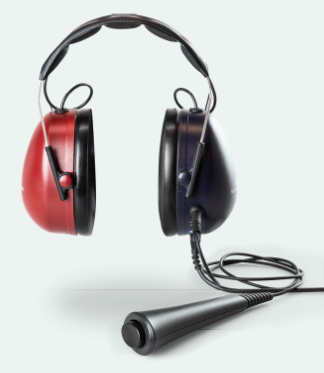
An audiometer tests hearing thresholds — how quiet a sound the patient can still detect, at different pitches (frequencies) and volumes. The Luna Interacoustics Audiometer covers a frequency range of 125 Hz to 8000 Hz at sound intensities from -10 dB HL to 120 dB HL, output through standard headphones, insert phones, or speakers for free-field testing. It also has a built-in microphone for voice tests and connects to an external audio source, giving it the range for a comprehensive hearing test rather than a basic screening. The output is an audiogram: a chart of hearing thresholds by frequency, which is what the remote audiologist reads to diagnose the type and degree of hearing loss.
A tympanometer tests something different: the mechanical function of the middle ear, not hearing itself. It measures how the eardrum (tympanic membrane) moves in response to controlled air pressure changes, which reveals fluid behind the eardrum, perforations, wax blockages, or Eustachian tube dysfunction — conditions that can cause hearing complaints but aren't hearing loss in the sensory sense. The Titan Interacoustics Tympanometer is a modular system that combines impedance audiometry, OAE (otoacoustic emissions), ABRIS, and wideband tympanometry in one configurable device, with probe frequency options of 226 Hz, 678 Hz, 800 Hz, and 1000 Hz and a pressure range of +200 daPa to -400 daPa.
Run together, an audiogram plus a tympanogram give the remote specialist both halves of the picture: whether the patient can hear, and why not, if they can't.
What to look for
- Full frequency and intensity range — the Luna's 125 Hz–8000 Hz span at -10 to 120 dB HL supports comprehensive threshold testing, not just a pass/fail screen.
- Multiple output paths — headphones, insert phones, and free-field speakers on the same audiometer, so the test setup matches the patient (adults, children, patients who can't tolerate headphones).
- Modular tympanometry — the Titan's combined impedance audiometry, OAE, ABRIS, and wideband tympanometry in one unit means a single device covers middle-ear function and otoacoustic emissions without swapping equipment.
- Probe frequency options — 226 Hz, 678 Hz, 800 Hz, and 1000 Hz probe tones, since infant and pediatric ears need higher probe frequencies than the standard adult 226 Hz tone.
- Fast test time — under 5 seconds per tympanometry test on the Titan, which matters for screening throughput in schools or occupational programs.
- Compact, portable form factor — the Titan's probe measures 9.5 x 4.5 x 2.2 cm, suited to mobile screening carts and multi-site rotations.
- Connectivity to a telemedicine platform — the equipment should transmit results digitally to a platform where a remote audiologist or ENT can review and interpret them, not just store data locally on the device.
Where it's used
Tele-audiology equipment fits any setting where hearing tests need to happen locally but specialist interpretation doesn't need to be on-site:
- Audiology clinics extending capacity across satellite locations without staffing an audiologist at every site.
- ENT departments using tympanometry to triage middle-ear conditions before an in-person visit, or reviewing audiograms captured elsewhere.
- Occupational hearing screening — industrial and workplace hearing-conservation programs that need baseline and annual audiograms for noise-exposed employees.
- School hearing programs — pediatric screening where a nurse or technician runs the test and a specialist reviews flagged results remotely.
- Remote diagnostic review generally — any workflow where the person running the test and the person interpreting it are in different locations.
In every case, the equipment on its own only captures data. The value of tele-audiology comes from pairing it with the MedConnect telehealth platform, which routes the audiogram or tympanogram to the reviewing specialist, keeps the result attached to the patient record, and lets the specialist send back an interpretation without a return visit.
How much do tele-audiology devices cost?
Pricing for the Luna audiometer and Titan tympanometer depends on configuration — probe options, bundled software modules (OAE, ABRIS, wideband tympanometry), and whether the unit is purchased standalone or as part of a telemedicine cart. We don't publish a flat number because the right configuration for a school screening program looks different from a multi-site ENT network. Request a quote against your specific use case on the product pages: Luna Interacoustics Audiometer and Titan Interacoustics Tympanometer, or browse the full analyzer category to compare against related diagnostic devices.
Frequently asked questions
Do I need both an audiometer and a tympanometer, or just one? It depends on what you're screening for. An audiometer alone is enough for a pure hearing-threshold screen (e.g., occupational noise exposure baselines). A tympanometer alone is enough to check middle-ear function without measuring hearing. For a complete tele-audiology workup — especially pediatric or diagnostic-grade assessments — clinics typically use both, since a hearing complaint can originate from either a sensory issue or a middle-ear issue.
Can the Titan test infants and young children? Yes — the Titan's probe frequency options include 678 Hz, 800 Hz, and 1000 Hz alongside the standard 226 Hz, and higher probe frequencies are specifically used for infant ears, whose ear canals respond differently to the standard adult tone.
How does the test result reach the remote audiologist? The device captures the audiogram or tympanogram locally, then results are transmitted through the MedConnect telehealth platform, where the remote audiologist or ENT specialist reviews and interprets them and returns findings to the patient's record — without needing the specialist physically present for the test.
Is the Luna audiometer suitable for a comprehensive clinical hearing test, or just a basic screen? It's built for comprehensive testing: the 125 Hz–8000 Hz frequency range and -10 to 120 dB HL intensity range, combined with headphone, insert-phone, free-field, and voice-test capability, cover full diagnostic audiometry, not just a pass/fail screening tone.
How fast is a tympanometry test with the Titan? Under 5 seconds per test, which is fast enough for high-throughput settings like school screening days or occupational health check-ins where many patients need to be tested in a single session.
To see full specifications and request a quote, visit the Luna audiometer and Titan tympanometer product pages, browse related devices in the analyzer category, or see how results reach a remote specialist on the MedConnect telehealth platform.
Ready to discover MedConnect?
Request a personalized demo and see how the platform adapts to your practice.
Request a demo