5 Reasons Your Telehealth Setup Is Missing Clinical-Grade Diagnostic Devices in 2026
Why Diagnostic Devices Still Matter in Telehealth
Telehealth adoption has accelerated. The clinical infrastructure behind it, for many care networks, has not.
A video call is useful. A clinical consultation requires more. Patients in nursing homes, rural communes, and mobile clinics are not presenting with administrative questions — they have chest pain, respiratory symptoms, and skin conditions that require real examination data. A conversation, however well-conducted, is not enough.
If your telehealth setup does not include clinical-grade diagnostic devices integrated directly into the consultation workflow, you are not delivering a full clinical consultation. Here is exactly why that gap exists, and what it costs.
Reason 1: Video Alone Cannot Replace Physical Examination
Most telehealth platforms were built around video. For many vendors, that was both the starting point and the endpoint.
A remote doctor can observe visible symptoms on screen. What they cannot do is listen to heart sounds, capture a 12-lead ECG, or examine an eardrum. Without clinical-grade diagnostic devices connected to the consultation, those assessments simply do not happen. The clinician makes a decision on incomplete data — or sends the patient for an in-person visit that could have been avoided.
This is not a technology limitation. It is a configuration choice. Platforms like Doxy.me and Zoom Healthcare were designed for video communication. Streaming live stethoscope audio or auto-uploading ECG results to a patient record is a different engineering problem entirely, and most video-first platforms have not solved it.
Your patients at remote sites deserve the same diagnostic rigour as those seen in a clinic. That requires devices, not just a camera.
Reason 2: Device Data That Never Reaches the Patient File
Even when diagnostic devices are physically present at a remote consultation point, the data often does not go where it needs to.
A nurse performs an ECG. The result prints on paper or saves to a device-specific app. The remote doctor reviews it on a separate screen — or waits for someone to email a PDF. The data may or may not be manually entered into the patient record. If it is entered, it might arrive hours after the consultation has ended.
That is not a minor inconvenience. It is a clinical and compliance risk. Missing or delayed device data means incomplete records, documentation gaps, and decisions made without the full picture.
The standard your setup should meet: device data in the patient file automatically, during the consultation. On MedConnect, a 12-lead ECG PDF uploads to the patient record in 5 seconds, with no manual entry required. The remote doctor sees the result while the patient is still on screen.
That is the difference between a device being present and a device being integrated.
Reason 3: Single-Device Platforms Leave Clinical Gaps
Some platforms have moved beyond video and added device support — but many are built around a single device category.
Eko Health is strong on cardiac auscultation. TytoCare covers a defined set of consumer-oriented devices. TeleSensi focuses on specific diagnostic tools. Each solves part of the problem. None covers the full range of clinical needs your teams encounter across a primary care network or nursing home.
A patient presenting remotely might need an ECG one day, a pulmonary function test the next, and a dermatological assessment the week after. If your platform only integrates one device type, your nurses are still switching between tools, your doctors are still working from incomplete data, and your records are still fragmented.
Multi-specialty device support is not optional in 2026. That means ECG, digital stethoscope, otoscope, dermatoscope, and biological analyzer — all connected to the same platform, all streaming to the same consultation, all writing to the same patient file.
Reason 4: Fragmented Tools Create Compliance and Documentation Risk
Count the tools your team uses for a single remote consultation. Video platform, device app, patient record system, billing software, referral process. For many networks, that is four or five separate logins, four or five separate data flows, and four or five places where something can go wrong.
Every handoff between tools is a documentation risk. Manually entered data can be entered incorrectly. Data that lives in one system but not another creates audit exposure. In France — where ARS-funded networks and EHPAD regulatory requirements set a high bar — that exposure is not theoretical.
The compliance argument for integrated clinical telehealth is straightforward: when device data, consultation notes, and billing all flow through one platform, you have a complete, traceable record. When they flow through separate tools, you have gaps.
The absence of AI documentation compounds this further. If your platform does not auto-generate SOAP notes during the consultation, your clinical staff are writing them afterward — from memory, under time pressure. That is where documentation quality degrades.
Reason 5: Deployment Complexity Keeps Diagnostic Devices Out of Remote Sites
Most clinical operations leaders already know their remote sites need better diagnostic capability. The barrier is not awareness. It is deployment.
Enterprise telehealth hardware projects have historically taken months to configure, train, and go live. For a CPTS coordinator managing 15 communes or a nursing home director overseeing multiple EHPAD sites, a six-month implementation is not realistic. Staff do not have the bandwidth. Sites often lack the technical infrastructure. Projects stall.
This is why deployment timelines matter as much as feature sets. A platform that takes months to reach go-live will not reach the sites that need it most.
The practical threshold for remote and rural deployments is 2 to 4 weeks from contract to live consultation. That requires pre-configured hardware, cloud or on-premise options that match local data sovereignty requirements, and a setup process that does not depend on a dedicated IT team at every site.
Hardware configurations matter here too. A fixed consultation room needs a cart. A mobile clinic needs a medical kit. A field nurse needs a backpack. If your current setup forces every site into the same configuration, the technology is adapting to itself — not to your teams.
What a Complete Clinical Telehealth Setup Looks Like
A complete setup in 2026 has five components working together:
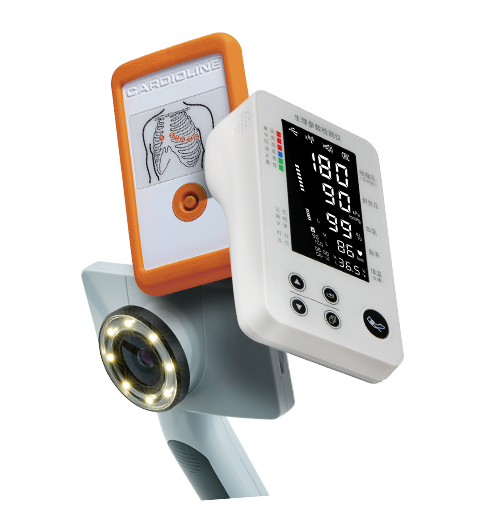
1. Clinical-grade diagnostic devices, multi-specialty. ECG, stethoscope, otoscope, dermatoscope — CE-certified, from professional-grade manufacturers. Not consumer devices repackaged for clinical use.
2. Real-time device streaming. Device data flows live to the remote doctor during the consultation. The ECG trace, heart sounds, and vital signs are visible simultaneously — not in a report sent afterward.
3. Automatic patient record integration. Device results write to the patient file automatically. No manual entry. No delay. Full traceability.
4. AI documentation. SOAP notes generated in real time, in the clinician's language. Post-visit documentation time drops to near zero.
5. One platform for the full workflow. Scheduling, consultation, devices, records, billing, and specialist referral — one screen, one login. No app-switching mid-consultation.
Promotal MedConnect is built specifically around this model. The platform has supported 50,000+ exams across 4 continents, with hardware from Welch Allyn, Schiller, Cardioline, MIR, Riester, and EDAN Instruments — all connecting natively to the same clinical workflow. ISO 27001:2022 certified and HIPAA-ready under a BAA, with data centers in the US, EU, and Middle East.
For primary care networks, the primary care networks solution page covers how the platform fits multi-site operations. For nursing homes, the EHPAD-focused solution addresses the specific documentation and compliance requirements of residential care.
Hardware configurations — telehealth cart, medical kit, and backpack — are available for different deployment contexts, all connecting to the same platform.
FAQs
What are clinical telehealth diagnostic devices? Clinical telehealth diagnostic devices are CE-certified medical instruments — 12-lead ECG machines, digital stethoscopes, otoscopes, dermatoscopes — that connect to a telehealth platform and stream examination data live to a remote clinician during a consultation. They differ from consumer health monitors because they meet professional clinical standards and integrate directly with patient records.
Why can't a standard video telehealth platform support diagnostic devices? Most video-first platforms were not built to handle device data streams or write results to patient records. Supporting diagnostic devices requires specific hardware integrations, data routing, and clinical workflow design that platforms like Doxy.me or Zoom Healthcare were not architected to provide.
How should ECG data be handled in a telehealth consultation? The ECG result should upload automatically to the patient record during the consultation — not after. A 5-second upload means the remote doctor can review the 12-lead result while the patient is still on screen, enabling real-time clinical decisions rather than delayed review.
What is the minimum set of diagnostic devices a telehealth setup should include? For primary care, a practical minimum includes a 12-lead ECG, digital stethoscope, pulse oximeter, blood pressure monitor, and otoscope. A dermatoscope and biological analyzer extend coverage for skin and lab-adjacent assessments. The right set depends on your patient population — but single-device setups leave significant clinical gaps.
How long does it take to deploy a full telehealth setup with integrated diagnostic devices? With a platform designed for rapid deployment, 2 to 4 weeks from contract to live consultation is achievable — cloud or on-premise. Longer timelines typically result from platforms requiring custom integrations between separate tools, or hardware that is not pre-configured for the software.
What compliance certifications should a clinical telehealth platform carry? At minimum: ISO 27001:2022 for information security management and HIPAA compliance for patient data handling. For EU deployments, GDPR alignment and data residency in Europe are also required. On-premise deployment options address data sovereignty mandates in markets like the Middle East.
Can one telehealth platform handle different hardware configurations across site types? Yes — and it should. A fixed consultation room, a mobile clinic, and a field nurse have different hardware needs. A platform that supports cart, medical kit, and backpack configurations — all connecting to the same software — lets you deploy the right hardware for each context without managing separate systems.
The Next Step
If your current telehealth setup relies on video without integrated diagnostic devices, the clinical and operational cost of that gap compounds with every remote consultation your teams deliver.
Whether diagnostic devices belong in telehealth is no longer the question. In 2026, that is settled. The question is whether your platform is built to handle them — or whether device data is still moving through a workaround.
Learn more at promotal-medconnect.com, or explore the full telehealth platform to see how MedConnect runs the complete clinical workflow from one screen.
Ready to discover MedConnect?
Request a personalized demo and see how the platform adapts to your practice.
Request a demo