AI-Generated SOAP Notes in Telemedicine: How Automated Clinical Documentation Works in 2026
What Are AI-Generated SOAP Notes?
Physicians spend 16 minutes documenting every patient encounter. That's 2 hours of administrative work for every 8-hour clinical day. In telemedicine, where consultation volume can triple traditional in-person visits, this documentation burden becomes unsustainable.
AI-generated SOAP notes promise to eliminate post-visit documentation entirely. But how do these systems actually work? What clinical accuracy standards do they meet? And can they truly capture the nuanced decision-making that defines quality medical care?
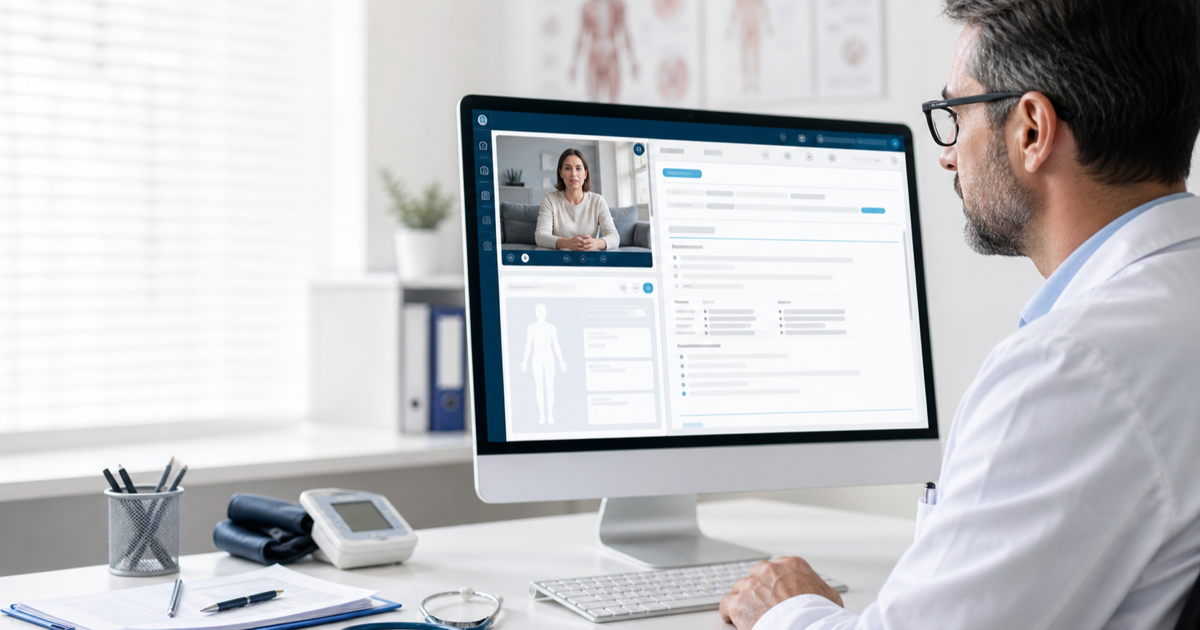
AI-generated SOAP notes use natural language processing to convert spoken consultation dialogue into structured clinical documentation. The system listens to patient-provider conversations during telemedicine visits and automatically generates the four SOAP components:
- Subjective: Patient-reported symptoms, history, concerns
- Objective: Clinical findings, vital signs, examination results
- Assessment: Clinical impression, differential diagnoses
- Plan: Treatment recommendations, follow-up instructions, prescriptions
Unlike transcription services that produce raw conversation text, AI SOAP note generators extract clinically relevant information and organize it into standardized medical documentation formats.
The technology builds on medical language models trained specifically on clinical conversations, medical terminology, and documentation patterns. These models understand context clues that distinguish between casual conversation and clinically significant statements during consultations.
How AI Documentation Works During Telemedicine Visits
Real-Time Audio Processing
Modern AI documentation systems process consultation audio in real-time, not as post-visit batch jobs. The system captures both provider and patient speech through the telemedicine platform's audio stream.
Advanced noise filtering separates clinical dialogue from background sounds, technical discussions about connectivity, or off-topic conversation. The AI identifies when clinical assessment begins and ends within the broader consultation context.
Medical Device Data Integration
In comprehensive telemedicine platforms, AI documentation extends beyond conversation capture. When medical devices stream live data during consultations—ECG readings, blood pressure measurements, pulse oximetry—this objective data automatically populates the SOAP note's objective section.
For example, when a 12-lead ECG completes during a consultation, the AI system captures both the numerical results and the provider's verbal interpretation, creating a complete objective assessment without manual data entry.
Clinical Context Recognition
AI systems trained for medical documentation recognize clinical significance markers in conversation. They distinguish between:
- Chief complaints versus incidental mentions of symptoms
- Current medications versus medication history
- Clinical examination findings versus patient self-assessments
- Treatment plans versus general health advice
This contextual understanding ensures the generated SOAP note reflects the consultation's clinical priorities rather than producing a chronological transcript.
Clinical Accuracy Standards for AI Documentation
Medical Terminology Precision
Clinical-grade AI documentation systems maintain medical terminology databases updated with current diagnostic codes, medication names, and procedure terminology. The system maps colloquial patient language to precise medical terms while preserving the patient's original phrasing when clinically relevant.
For instance, when a patient describes "chest tightness that feels like an elephant sitting on my chest," the AI captures both the patient's exact words and the clinical significance of chest pressure symptoms.
Diagnostic Code Integration
Advanced AI documentation systems integrate with ICD-10 and CPT coding frameworks. When providers discuss diagnoses or procedures during consultations, the system suggests appropriate billing codes based on the clinical content.
This integration reduces coding errors and ensures documentation supports accurate billing and quality reporting requirements.
Audit Trail Maintenance
Medical-grade AI documentation maintains complete audit trails showing:
- Original audio timestamps for each SOAP section
- Confidence scores for AI-generated content
- Manual edits made by providers post-consultation
- Version history for compliance reviews
These audit capabilities meet regulatory requirements for medical record integrity and support quality assurance processes.
Technical Requirements for Telemedicine AI Documentation
HIPAA-Compliant Processing
AI documentation systems processing patient conversations must meet strict privacy requirements. Audio data requires end-to-end encryption during transmission and processing. Many systems process audio locally or in dedicated healthcare cloud environments rather than using general-purpose AI services.
ISO 27001:2022 certification and HIPAA compliance represent baseline security requirements for any AI documentation system handling patient data.
Multi-Language Support
International telemedicine deployments require AI documentation in multiple languages. Advanced systems support clinical documentation in French, English, Arabic, and Italian, maintaining medical terminology accuracy across languages.
This multilingual capability proves essential for healthcare organizations serving diverse patient populations or operating across international markets.
Integration Architecture
AI documentation systems must integrate with existing electronic health record (EHR) systems without disrupting clinical workflows. The most effective implementations embed directly within telemedicine platforms rather than requiring separate applications or manual data transfers.
Benefits of Automated Clinical Documentation
Reduced Administrative Burden
Physicians using AI-generated SOAP notes report 75% reduction in post-visit documentation time. This time savings allows providers to see additional patients or spend more time on direct patient care during consultations.
For telemedicine programs operating at scale, this efficiency gain translates to significant cost savings and improved provider satisfaction scores.
Improved Documentation Consistency
AI systems apply consistent documentation standards across all consultations. Unlike manual documentation that varies by provider preference or time constraints, AI-generated notes maintain uniform structure and completeness.
This consistency improves care coordination when multiple providers access patient records and supports quality measurement initiatives requiring standardized documentation.
Enhanced Clinical Decision Support
AI documentation systems can identify patterns across patient visits that individual providers might miss. When the same patient presents with recurring symptoms documented across multiple consultations, the system can highlight these patterns for provider review.
Some advanced systems flag potential medication interactions or contraindications based on documentation patterns, providing real-time clinical decision support.
Implementation Considerations for Medical Directors
Provider Training Requirements
Successful AI documentation implementation requires provider training on optimal consultation practices. Providers must learn to speak clearly during examinations, verbalize clinical reasoning, and structure conversations to maximize AI accuracy.
Most organizations require 2-4 hours of initial training plus ongoing coaching to achieve optimal AI documentation results.
Quality Assurance Protocols
Medical directors should establish review protocols for AI-generated documentation. Initial implementations typically require 100% provider review of AI-generated notes. As accuracy improves and provider confidence increases, many organizations transition to sample-based quality reviews.
Workflow Integration Planning
AI documentation works best when integrated into existing clinical workflows rather than added as a separate step. The most successful implementations embed AI documentation directly into telemedicine platforms, eliminating the need for providers to access separate documentation systems.
Real-World Performance: AI Documentation in Practice
Healthcare organizations deploying AI documentation in telemedicine report measurable improvements in operational efficiency. Primary care networks using integrated AI documentation complete 30% more patient consultations per day while maintaining documentation quality standards.
Nursing home networks implementing AI documentation for specialist consultations reduce documentation delays from 24-48 hours to real-time completion. This improvement accelerates care plan updates and medication adjustments.
International health programs using multilingual AI documentation maintain consistent clinical records across diverse geographic deployments, supporting quality assurance and regulatory compliance requirements.
Choosing AI Documentation Technology
When evaluating AI documentation systems, medical directors should prioritize:
Clinical Integration Depth: Systems that integrate medical device data alongside conversation capture provide more complete documentation than audio-only solutions.
Deployment Speed: Look for systems deployable in 2-4 weeks rather than lengthy implementation cycles that delay operational benefits.
Compliance Certification: Ensure systems meet ISO 27001:2022 and HIPAA requirements with documented security frameworks.
Multi-Language Support: For international operations, verify AI accuracy across all required languages, not just English-language implementations.
Platform Integration: Choose systems that embed within existing telemedicine platforms rather than requiring separate applications or manual data transfers.
The Future of Clinical Documentation
AI documentation represents the first step toward fully automated clinical workflows. As these systems mature, they will expand beyond SOAP note generation to include automated billing code suggestions, quality measure calculations, and clinical decision support recommendations.
The most advanced implementations already integrate AI documentation with medical device data streams, creating complete clinical records without any manual data entry. This integration eliminates documentation delays and reduces transcription errors that can impact patient safety.
For healthcare organizations planning telemedicine expansion, AI documentation capabilities should factor into platform selection decisions. The administrative efficiency gains and improved documentation quality directly impact both operational costs and clinical outcomes.
Learn more at promotal-medconnect.com
Ready to discover MedConnect?
Request a personalized demo and see how the platform adapts to your practice.
Request a demo