
Case study — Ivory Coast
Primary Care Telehealth in Ivory Coast: 10 Centers Equipped
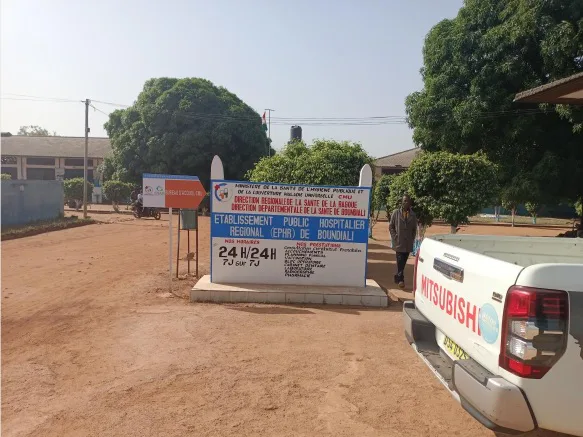
From November 2023 to August 2025, a clinical telehealth pathway was deployed across 10 primary healthcare centers (PHCs) in the Divo and Boundiali districts. The program combined a software platform, connected medical devices, workforce training, and power-resilience measures.
10
primary healthcare centers
4,816
patients supported
73
professionals trained
612
ultrasound examinations
784
teleconsultations or tele-expertise reviews
137
ECG examinations
Consolidated operating period: November 2023 to August 2025.
Context
Connecting primary care with remote expertise
Ivory Coast health authorities, the INSP, the DMHP, OPHIR Technologies, and Promotal MedConnect worked toward one goal: enabling primary care teams to capture clinical data and request remote expertise without routinely transferring the patient.
The scope covered five centers in Divo and five in Boundiali. The platform, examination devices, connectivity, training, and support were prepared as one operating pathway.
Results by district
Concrete tracking of examinations and care pathways
| District | PHCs | Patients | Ultrasounds | Teleconsultations / expert reviews | ECG |
|---|---|---|---|---|---|
| Divo | 5 | 1,879 | 516 | 628 | 91 |
| Boundiali | 5 | 2,937 | 96 | 156 | 46 |
| Total | 10 | 4,816 | 612 | 784 | 137 |
Training and adoption
73 professionals trained for their role
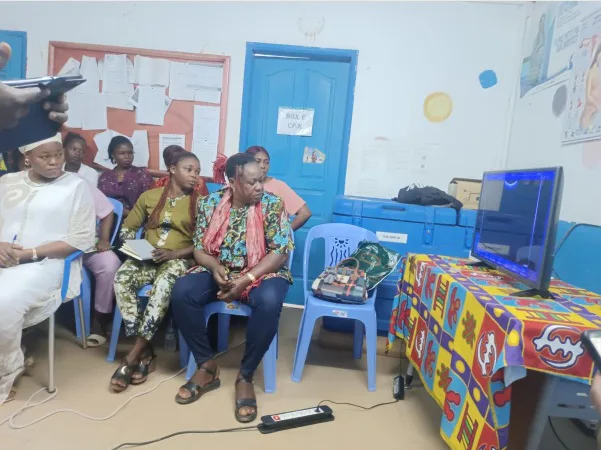
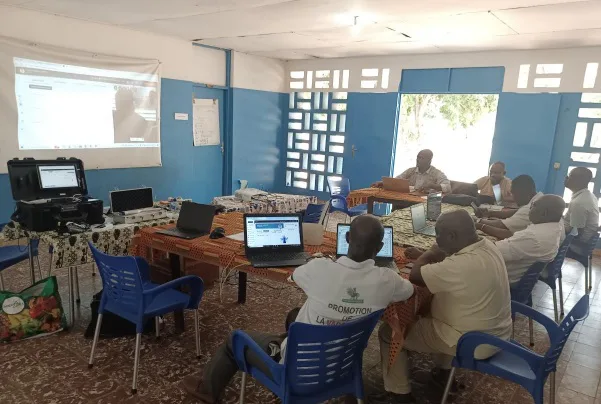
The program trained 31 physicians, 20 nurses, and 22 midwives. Each pathway combined platform use, vital-sign and ECG acquisition, connected-device handling, and complete teleconsultation exercises.
31
physicians
20
nurses
22
midwives
Deployment method
Six phases from equipment delivery to sustained use
Field experience shows that technology alone is not enough. Every center must be prepared, tested, trained, and supported over time.
01
Site assessment
Review power, connectivity, facilities, security, and team availability at every location.
02
Preconfiguration
Install software, prepare accounts, pair devices, and complete acceptance testing before shipment.
03
Installation
Inventory, assemble, connect, function-test, and document acceptance at each center.
04
Role-based training
Use distinct practical pathways for physicians, nurses, midwives, and technical leads.
05
Supported launch
Run complete teleconsultation scenarios, reinforce support, and structure early incident reporting.
06
Operations
Monitor usage, maintain equipment, coordinate clinical activity, and schedule specialist availability.
Lessons for scaling
Operational design determines service continuity
- Assess every site: power, connectivity, space, security, and staff availability.
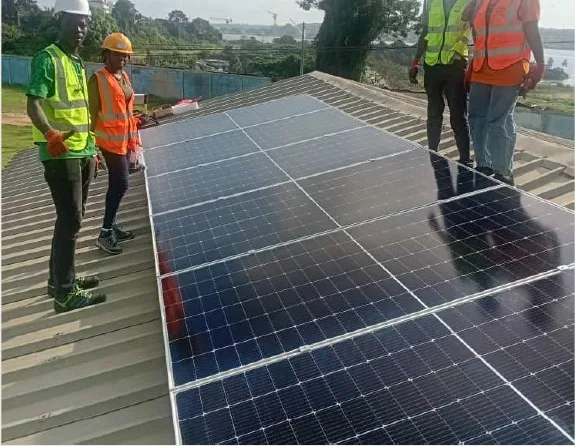
- Build power resilience: plan continuity measures and the local skills required to maintain them.
- Coordinate the clinical network: schedule sessions and ensure remote clinicians are available.
- Measure adoption: track requests, completed opinions, examinations, incidents, and support needs.
Continued adoption after the initial period
Tele-expertise activity continued
As of July 21, 2026, the aggregated operational extract contained 1,326 tele-expertise cases involving 1,111 distinct patients. Of those cases, 744 had received a completed clinical opinion.
1,326
cases created
1,111
distinct patients
744
completed opinions
Between September 2025 and July 21, 2026, teams created 153 new cases and completed 59 clinical opinions. Continued activity demonstrates adoption of the pathway; its intensity also highlights the need for active clinical coordination and available specialists.
Methodology note
Results from November 2023 through August 2025 come from the consolidated deployment report. Figures through July 21, 2026 come from an aggregated, anonymized technical extract: no names, clinical content, contact details, or individual identifiers were extracted. The two reporting scopes are presented separately.
The rollout across the ten centers was also documented by the Ivorian Press Agency .
Plan a deployment for your health system
We can assess sites, connectivity, clinical pathways, equipment, training, and support before defining the configuration.